Friday, July 14, 2017

Goldtex redux? Can peace stick between Post Brothers and unions?


When Philadelphia contractors and the building trades talked peace more than a year ago, there was a lot of good dining going on, with the players choosing gnocchi or chicken marsala at Spasso’s Italian Grill in Center City or one of those hefty hot pastrami sandwiches at the Famous 4th Street Deli on South Street.

They are not eating together now — they’re too busy holding their collective breaths to see whether a fragile labor peace eked out over meals between union leaders and the Pestronk brothers, who challenged union hegemony over city construction, will hold during the apartment conversion of the 1920s Atlantic office tower at Broad and Spruce Streets.

At the moment, the truce is looking fragile.

Wednesday, July 12, 2017

Planned strike at Philly airport called off


The union representing skycaps, wheelchair attendants, cabin cleaners, and baggage handlers at the luggage carousels said it has called off plans to strike at Philadelphia International Airport starting Wednesday.

The SEIU Local 32BJ, which represents 1,400 people at the airport, said early Wednesday that the union, American Airlines and other stakeholders had entered last-minute discussions and talks would take place later in the morning.

Workers were to start leaving their jobs at 9 a.m., said Julie Blust, spokeswoman for SEIU Local 32BJ. Pickets at Terminal B and C departure gates and a rally had also been planned.

Amtrak zeroes in on a 30th St. Station Plaza as district plan progresses


Amtrak wants to replace the traffic-choked snarl that surrounds Philadelphia’s 30th Street Station with tree-canopied public spaces in an early step toward realizing the transit corporation’s $6.5 billion redevelopment vision for a huge adjacent swath of University City.

The passenger-rail operator plans to present a proposal for what it is calling 30th Street Station Plaza at an open house at the station late Wednesday afternoon.

Monday, July 10, 2017

In Philly, little strike sparks a big plan


Most days, only about 30 union crane and construction-hoist operators move equipment and people at the Comcast tower job site — where 1,300 carpenters, laborers, masons, glaziers, and electricians work daily to erect what will soon be the tallest building between New York City and Chicago.

But two Fridays ago, on June 30, their union, though few in number, held a contract protest that shut the job down, sending hundreds of construction workers home, hard hats and coolers in hand.

This past Friday, members of Local 542 of International Union of Operating Engineers met at their hall in Fort Washington and ratified a new three-year contract giving them a $2-an-hour raise.

How a Philly charter school benefits Local 98


In 2002, labor leader John J. Dougherty championed a new charter school whose goals included guiding more minority workers into his overwhelmingly white union.

In its founding documents, Philadelphia Electrical & Technology Charter High School committed, in part, to providing students the skills needed for “participation in the apprenticeship program offered to qualified individuals by Local 98.”

Fifteen years on, it appears the school, founded by Dougherty, business manager of Local 98 of the International Brotherhood of Electrical Workers, and the union, has fallen short.

The school, where 71 percent of its 620 students are African American, has no record of any graduates entering Local 98’s apprentice training program.

But the school has done better by Dougherty, becoming a job bank for family members and friends of the powerful Democrat known as “Johnny Doc” and providing members — and taxpayer-covered dues — for his union. Dougherty did not return calls seeking comment for this article.

Saturday, July 8, 2017

Crane operators to vote on new contract

Crane operators and other members of Local 542 of the International Union of Operating Engineers are expected to vote on a new contract Friday evening. They had been out on strike from June 27 through June 30, slowing construction at least 30 sites in the city and the Pennsylvania suburbs.

Both sides, the union and the General Building Contractors Association, said they would issue a statement following the vote, either Friday evening or Saturday.

The operating engineers did not put up picket lines or ask other unions to stay off construction sites. As a practical matter, however, construction at many sites around the region, including the new Comcast tower and several university projects, slowed because union members operate construction elevators as well as equipment that hoists heavy materials.

On June 30, the union held a protest at the new Comcast tower that shut down construction, as other building-trade unions declined to enter the job site.

That morning walkout was followed by hours of talks in the afternoon, when enough of an agreement was reached to enable some union members to begin returning to work as early as July 1. It took the rest of the next week to hammer out an agreement for what will be a three-year pact with a $2-an-hour raise each year.
The union’s contract had expired April 30. Issues included the duties of oilers, overtime pay, and how the General Building Contractors Association would collect its dues.

Source: Philly.com

Office building in Conshohocken sells


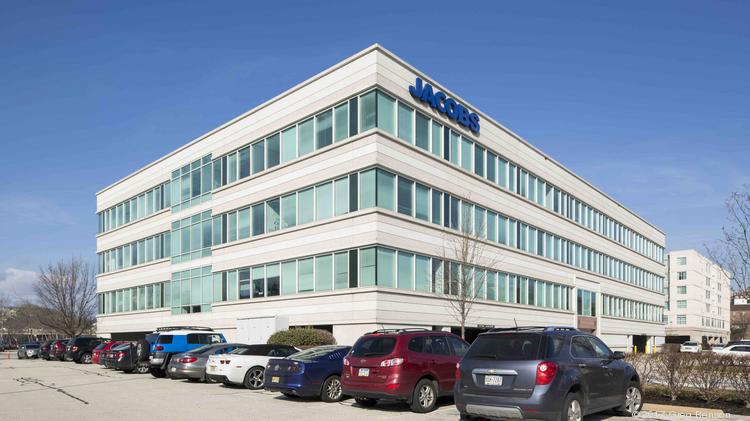
Gladstone Commercial Corp. has paid $15.45 million for Three Tower Bridge, a 60,016-square-foot office building in Conshohocken, Pa.

The seller was Oliver Tyrone Pulver, which developed the building at 2 Ash St. for $8 million in 1997.


At the time, Jacobs Engineering Group Inc. leased 90 percent of the building and now the engineering firm occupies the entire structure. Jacobs had relocated from Narberth, Pa., to the new building.

Gladstone is a real estate investment trust based in McLean, Va. Robert Fahey, Jerry Kranzel and Erin Hannan of CBRE Inc. represented the seller.

Other happenings in Conshohocken's commercial real estate sector include the $100 million Sora West development from Keystone Property Group and plans to create a new standalone 42,000-square-foot office building. The latter project is part of a $10 million renovation of 1100 E. Hector St.

Philly union strike ends, construction resumes with tentative union agreement: The strike delayed work all around the city


Dozens of construction sites came to a halt in the Philadelphia region last week when contract negotiations between a local union and the General Building Contractor’s Association came to an impasse. But just before the long July Fourth weekend, the two sides were able to come to a tentative agreement and resume work. 

On Friday, June 30, the Local 542 International Union of Operating Engineers announced via a Facebook post that it had come to an agreement with the GBCA after a five-hour meeting and had decided to put its union members back to work. 

Friday, July 7, 2017

Carpenters group seeks unpaid union contributions from contractor


PHILADELPHIA — A labor group is suing Ground Penetration & Restoration Inc. and Joseph Diasio, owner of the company, citing alleged breach of contract for failure to contribute to union funds.

John Ballantyne, acting on behalf of Carpenters Benefits Funds of Philadelphia and associated entities, The Northeast Regional Council of Carpenters and General Building Contractors Association Inc., filed a complaint on Feb. 24 in the U.S. District Court for the Eastern District of Pennsylvania alleging that the defendants failed to pay their monthly contribution to the plaintiffs.

According to the complaint, Ballantyne claims that affected employees of Diasio's sustained damages due to unpaid contributions. The plaintiffs hold Diasio and his company responsible because they failed to post payment for the monthly contributions based on their labor agreement with the plaintiffs.

The plaintiffs seek judgment against the defendants for all amounts owing, audit costs, interest, liquidated damages, court costs and any further relief the court grants. They are represented by Daniel Keenan of Jennings Sigmond P.C. in Philadelphia.

U.S. District Court for the Eastern District of Pennsylvania Case number 2:17-cv-00875-MSG


Source: Penn Record
 

Lancaster roofing supply company's lawsuit says Philly firm breached contract with it

PHILADELPHIA – A Lancaster-based roofing supply company claims another roofing company based in Philadelphia breached its contract with it, in excess of $8,000.00 and associated interest.

Beacon Sales Acquisition, Inc. (doing business as “Quality Roofing Supply Co.”) filed suit in the Philadelphia County Court of Common Pleas on June 19 versus Mazzoni Bros. & Sons Roofing, Inc. and Stephen & Mary Mazzoni, all of Philadelphia.

“At the oral instance and request of defendant, Mazzoni Bros. & Sons Roofing, Inc. plaintiff sold and delivered to defendant, Mazzoni Bros. & Sons Roofing, Inc. goods at the times, of the kinds, in the quantities and for the prices set forth in plaintiff’s invoices,” the complaint states.

Operating Engineers union says Criniti Construction failed to pay monthly dues


PHILADELPHIA — A union is suing Criniti Construction Inc. and Joseph Criniti, citing alleged breach of contract.

The International Union of Operating Engineers of Eastern Pennsylvania and Delaware and related employee funds filed a complaint on June 20 in U.S. District Court for the Eastern District of Pennsylvania alleging that the employer failed to remit its employees' contributions.
According to the complaint, the plaintiffs allege that its organization was financially damaged due to unpaid contributions. The plaintiffs hold Criniti Construction and Joseph Criniti responsible because the defendants allegedly breached their bargaining agreement with the plaintiff by not paying their monthly contributions.

The plaintiffs seek $9,776.39 in unpaid principal amounts, interest at a 10 percent rate, $977.64 in liquidated damages, $571.06 in dues, court costs and any further relief this court grants. They are represented by Regina C. Hertzig and Jeremy E. Meyer of Cleary, Josem & Trigiani LLP in Philadelphia.

U.S. District Court for the Eastern District of Pennsylvania case number 2:17-cv-02770-JCJ

Source: Penn Record

Wednesday, July 5, 2017

Building trade unions and Rebuild - a slippery slope


As part of an ongoing investigation into union corruption in Philadelphia, the FBI has acknowledged yearlong wiretaps of Philadelphia Building and Construction Trades Council leader John Dougherty and City Council Majority Leader Bobby Henon.

Along with the rest of us, city officials were well aware of the federal investigation after FBI and Internal Revenue Service agents conducted very public raids of Henon’s City Hall office, Dougherty’s home, and the offices of IBEW Local 98, the electricians union headed by Dougherty. That was last August. Since then, federal investigators have intercepted calls to and from numerous union and city officials, including Mayor Kenney.

All of which begs the question: Why would the mayor’s office place the Philadelphia Building and Trades Council at the center of labor negotiations on the $500 million, taxpayer funded construction project known as Rebuild, when the council’s leader is under federal investigation?

The mayor’s spokewoman, Lauren Hitt, says the negotiations aren’t about one person who is under federal investigation, but about 21 different organizations that signed onto the city’s memorandum of understanding around the Rebuild project.

I guess that’s fair. But when federal search warrants say officials are seeking evidence concerning allegations such as embezzlement of union funds, extortion by an unnamed public official, mail and wire fraud, tax evasion and the use of “economic fear” to manipulate and pressure contractors, it gives me pause.

To be clear, neither Dougherty nor Henon has been charged with wrongdoing at this point. But the longstanding pattern of exclusion that Philadelphia’s building trade unions have engaged in is more than troubling.

To be blunt, if racism and sexism were crimes, the numbers would paint a compelling case against many of Philadelphia’s skilled trade unions. And the City of Philadelphia would stand accused as a willing accomplice.

In Fiscal Year 2016, an astounding 63 percent of small, city-funded construction projects had no people of color or women on the workforce, 42 percent of midrange city-funded construction projects had no people of color or women on the workforce. And 9 percent of the largest city-funded construction projects — those with the most scrutiny and oversight — had no minority workforce at all. The same thing happened in Fiscal Year 2015, when 44 percent of city-funded projects had no women or people of color on the workforce.

How does that happen in a city where the majority of people are black and brown? It’s a public-private partnership of sorts.

First, the building trades unions build a political organization composed of millions in campaign contributions. Then a parade of mayors signs executive orders mandating that labor deals on major city-funded construction go through the unions. Then the city pretends that it will punish those who exclude women and people of color from taxpayer-funded projects.

The punishment rarely, if ever, comes.

That’s because the unions largely determine the labor pool on city-funded construction projects. That reality leaves the door open for the kind of brazen racial exclusion that we’ve seen in much of the city-funded construction in Philadelphia.

A 2008 document called the Philadelphia Building and Construction Trades Council AFL-CIO Diversity Commitment and Plan gives a bird’s-eye view into the numbers that make such discrimination possible.

The document, signed by representatives of 12 unions — the electricians and carpenters refused to sign — promised that the Philadelphia Building and Trades Council would ensure that “minorities and women are fully utilized in the pending expansion of the [Pennsylvania Convention] Center.”

Those who signed submitted their membership numbers by residency and race, and the results were fascinating.

On average, just 19 percent of the union’s members were women or people of color, and only 28 percent of each union’s members lived in Philadelphia. Just 12 percent were black, nearly 4 percent were Hispanic, 1 percent were women, and less than 1 percent were Asian or Native American.

Were it not for the Laborer’s Union, which is majority black and Philadelphian, the numbers would be even worse.

With Rebuild coming, city unveils diversity partnership with building trades


The historically narrow pipeline for minorities into Philadelphia’s building trades just got a little wider.

Under an agreement made public for the first time Tuesday, the trade unions and the city will launch a pre-apprenticeship program for the forthcoming Rebuild initiative, which is expected to involve renovations at upward of 150 parks, recreation centers, and libraries over the next six or more years.
                 
City officials said about 30 people, drawn from low-income neighborhoods, will be enrolled in the first year, with plans to increase that number over the project’s lifespan.

Tuesday, July 4, 2017

Schuylkill Yards is the latest Philly project with workforce-diversity aims


Brandywine Realty Trust is adding its planned Schuylkill Yards development in University City to a growing list of Philadelphia projects that aim to spread the benefits of the city’s building boom to a wider swath of residents than its disproportionately white building-trade membership rolls.

As a condition of the approvals it needs to start work on the decades-long office, retail, and residential project, Brandywine has pledged to impose a financial penalty on contractors who do not live up to its work-site diversity goals. The penalty would be equal to 0.1 percent of a contractor’s fee, chief executive Jerry Sweeney said.

Brandywine Realty Trust making $5.6M investment in West Philadelphia


An ambitious, innovative $3.5 billion mixed-use project, called Schuylkill Yards, will get an injection of $5.6 million toward job creation and community engagement, developer Brandywine Realty Trust announced today.

Brandywine’s Neighborhood Engagement Initiative, the company announced, is designed to support local and minority businesses; employ local workers; provide job training and workforce advancement; preserve and add to the housing stock for all income levels; and encourage community organizations to fully engage in all aspects of their neighborhood development.

The monster development on land owned by Drexel University and Brandywine will take between 15 and 20 years to complete and transform a huge swath of West Philadelphia.

Refiners rebound, and Phila. Energy Solutions workers want cut benefits restored


Embattled East Coast refiners including Philadelphia Energy Solutions “are performing better than expected this year,” a financial analyst reported Monday, buttressing the arguments of PES refinery workers who have threatened to strike unless cuts to health and pension benefits are restored.

A report by investment-research firm Morningstar says PES, Monroe Energy in Trainer, Delaware County, and the Bayway Refinery in Linden, N.J., have unexpectedly rebounded from the loss of cheap domestic crude delivered by rail from North Dakota, which revived the refineries’ fortunes before oil prices crashed in 2015.

Monday, July 3, 2017

Steelworkers threaten strike at South Philadelphia refinery


Roughly 750 union steelworkers at the Philadelphia Energy Solutions refinery in South Philadelphia will be making a decision this week whether or not to strike because of midcontract changes to pension and health care benefits, the Delaware County Times reports.

According to union leadership, which delivered a letter to PES, a joint venture between Carlyle Group and Energy Transfer Partners that produces 335,000-barrel-per-day at the refinery, a large part of the United Steelworkers Union Local 10-1 contract is negotiated on the national level with representatives from refineries across the country bargaining with representatives from industry. Minor issues are then determined at the local level. Union leaders told the Times that the pension and the medical provisions are in the national agreement.

FBI digs deep in probe of Dougherty and union


Almost a year after FBI agents raided the offices of Philadelphia labor leader John Dougherty and his electricians’ union, the sweeping scope of its investigation is becoming evident.

Search warrants and the recent disclosure of long-running wiretaps make clear that the federal inquiry extends to virtually every aspect of the union’s operations, as well as Dougherty’s personal finances.

Along the way, it has touched a broad swath of Philadelphia’s political class and even reached into the office of Mayor Kenney, whose voice, like scores of others, was picked up on wiretaps placed on the union leader’s phone.

Fragile peace: Crane union may end walkout


Striking crane operators are back to work amid a fragile peace between their union and an organization of building contractors.

The strike, which began Tuesday, slowed, but generally didn’t stop, construction at projects in Center City and throughout the region, including the Comcast Corp. tower, Chester County Hospital, Market Street East, and the W Hotel.

“Today Bob Heenan and I met for five hours to resolve the strike with the GBCA,” Tom Danese, recording secretary for International Union of Operating Engineers Local 542, wrote on the union’s Facebook page. The post went up Friday evening, without stating when exactly workers would be back on the job. “We are putting everyone back to work. Something’s [sic] need to be ironed out over the weekend, but at this time we are back to work. That is all I can say at this time.”

Work halted at Comcast tower as crane operators protest


Fed up with an impasse in contract talks, union crane operators staged a protest Friday at the new Comcast tower being built in Center City. Construction halted as the other building trades walked away from the job.

Hundreds of workers clogged the corner of 19th and Arch Streets, the northwest corner of the building site, at 6:30 a.m., the start of their shifts, waiting for instructions on whether to enter.

Local 542 of the International Union of Operating Engineers has not put up picket lines at other sites so that construction can continue and the other building-trades unions can keep working. Ordinarily, union members do not cross another union’s picket lines.